Bargain bin
OnePlus 3T vs. Google Pixel XL
Half the price, but just as good?
Episode 2 of our Bargain bin comparisons pits the Google Pixel XL against the OnePlus 3T. The first Phone by Google versus the Flagship killer, generation 3.5. The droid priced to match the iPhone against a high-end phone that won't break your bank.
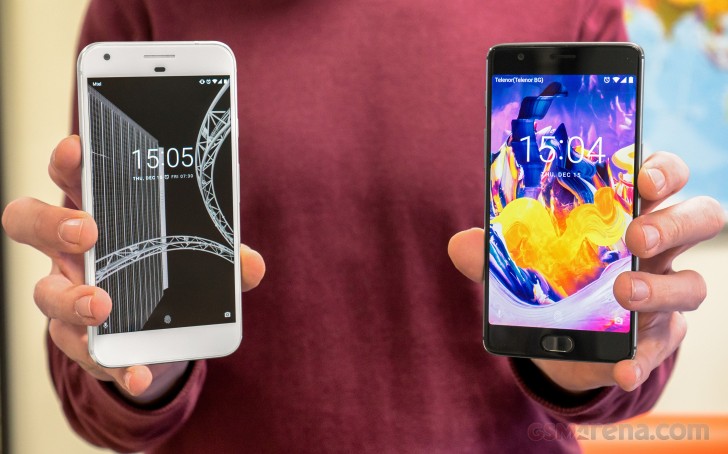
If there ever was a perfect match for this series - this is it. They've both got the latest and greatest chipset, 5.5-inch AMOLEDs, aluminum bodies, vanilla Android, even their battery capacities are similar. And the price premium? The Pixel XL would easily cost you 2x the price of the OnePlus 3T.
Admittedly, there are aspects where some difference in class can be observed. For example, the 3T's display resolution is FullHD, while the Pixel XL sports a VR-suitable QHD panel. Google's phone is also running the latest Android 7.1 Nougat, while the 3T is still on good ol' Marshmallow, though an update is already in the works.
But in other areas, the 3T is actually superior (at least on paper) - 6GB of RAM vs 4GB, 64GB base storage vs. half that (neither has a microSD slot), 16MP primary camera with OIS vs. 12.3MP, no OIS, 16MP selfie shooter vs. um... half that - could the bargain alternative be better than its posh rival?
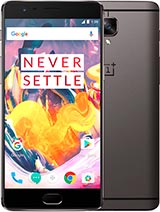 OnePlus 3T | 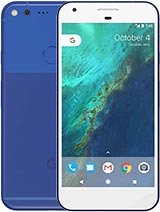 Google Pixel XL | |
|---|---|---|
| Around €440/$440 | Around €900/$770 | |
| Metal 7.4mm thick, 158g | Metal 8.5mm thick, 168g | |
| 5.5" Optic AMOLED 1080p (401ppi) | 5.5" AMOLED 1440p (534ppi) | |
| 16MP (OIS) 2160p | 12.3MP 2160p | |
| 2.35GHz (quad) Qualcomm Snapdragon 821 | 2.15GHz (quad) Qualcomm Snapdragon 821 | |
| 6GB RAM 64 GB/128GB memory | 4GB RAM 32GB/128 GB memory | |
| 3400mAh | 3450mAh |
Availability
Unlike the first pair we compared last week, which had availability issues, these two are available globally. There is the occasional hiccup in OnePlus 3T stocks with some backordering, and the 128GB version is more of a unicorn, but basically you can get a 3T in most markets. Same with the Pixel.
Retail package
With the Pixel XL you're getting an 18W fast charger that's not only Type-C but also one of the few chargers that adhere strictly to the USB power delivery spec. There's a C-to-C and a C-to-A cable in the bundle as well as a C-to-A adapter for plugging in peripherals. The Pixel XL complies to the USB 3.0 standard.
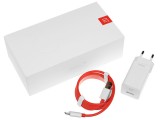
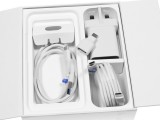
Dash charger with the OnePlus 3T • PD charger and assorted cables with the Pixel XL
The OnePlus 3T, on the other hand, ships with a custom charger and cable combo that together enable DASH fast charging (5V, up to 4A). You need both for the fast charging though as the system relies on a custom pinout of the otherwise USB 2.0-specced Type-C port.
Neither phone ships with a headset.
Half the price, just as good: Yes and no. You are getting a fast charger with the OnePlus 3T, but it's a proprietary solution so you have to stick to their approved accessories. There's also the matter of the slower USB 2.0 connection.
Design
The OnePlus 3T reuses the original 3's design, to the point that some readers questioned whether we actually shot the 3T for its review (we did!) or just straight up reused the old images. That's hardly a bad thing- the 3T looks and feels as upmarket as any big-name flagship.
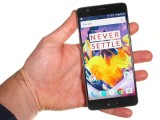
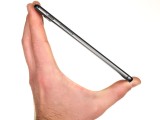
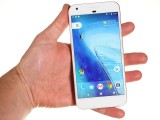
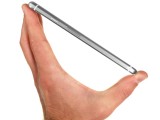
OnePlus 3T in the hand • Google Pixel XL in the hand
An all-aluminum handset that measures just 7.4 thick, the 3T loses points in the looks department only for its protruding camera. But it is the Pixel XL it's up against and its back is hardly a looker - you'll learn to live with it, and you may understand why Google went bold, but does anyone seriously actually like that?
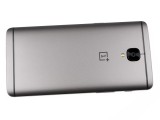
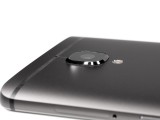
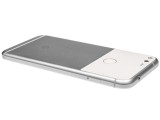
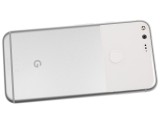
OnePlus 3T's camera sticks out a bit • The Pixel XL's is flush with the back, which can hardly save it
The OnePlus 3T's fingerprint sensor is on the front, below the display. It works great even though it's not an actual button and it doesn't have any sort of haptic feedback. The Pixel XL fingerprint sensor is on the back, under a cutout in the back glass.
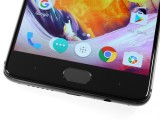
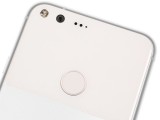
Fingerprint reader in the capacitive home button • Fingerprint reader on the back
One thing the OnePlus 3T has and the Pixel XL doesn't is a 3-position mechanical switch to toggle between normal ringing mode, do not disturb and silent. The OnePlus 3T can take a couple of nanoSIM cards while the Pixel XL is single SIM only. Neither phone is water resistant, though the Pixel XL does have an IP53 rating meaning it is splash-resistant. Not the 3T, though.
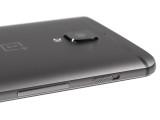
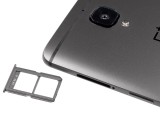
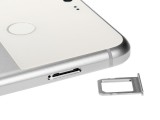
3T's 3-position 'mute' switch • The OnePlus 3T is a dual SIM device • just the one slot on the Pixel XL
Half the price, just as good: Yes, if not better. The high-quality build and premium feel of the OnePlus 3T are up to flagship standard, while the Pixel XL's half-glass back isn't doing it any favors.
Screen
5.5-inch AMOLED panels on both phones, but the Pixel XL has a bunch more pixels - its resolution is QHD, while the OnePlus was more conservative and went with FullHD. The Pixel is thus a lot better suited to VR uses than the 3T, and that alone could be a deal-breaker for some of you.
AMOLEDs aren't record breakers for brightness but both displays here post above average numbers in this department, with a marginal advantage for the 3T. It also edges ahead in the sunlight legibility test.
| Display test | 100% brightness | ||
| Black, cd/m2 | White, cd/m2 | ||
| 0 | 447 | ∞ | |
| 0 | 432 | ∞ | |
Sunlight contrast ratio
Not much to split the two in color accuracy either. The Pixel XL is somewhat more on point in default mode (avg. DeltaE 5.4 vs 6.4 for the 3T), but enabling sRGB mode on both phones shrinks the difference to 2.6 vs. 2.8.
Half the price, just as good: We had a hard time calling this one, but No. The OnePlus 3T's display is great and matches the Pixel XL's in all areas but resolution. It's a prime example of the saying, you get what you pay for.
Battery
The OnePlus 3T and the Pixel XL pack nearly identical batteries - 3,400mAh for the 3T and the 3,450 for the XL. There is of course the tiny difference of the display resolution - the high resolution screen of Pixel XL should be more taxing on the battery.
Well our tests showed that's the case only in video playback where the 3T outlasts the Pixel XL by more than 2 hours. In Wi-Fi web browsing the OnePlus phablet calls it quits a little earlier than the Pixel, and in voice calls the Phone by Google can last a couple more hours than the 3T. Neither web browsing time is truly impressive though, while both phones are very efficient when it comes to talk time.
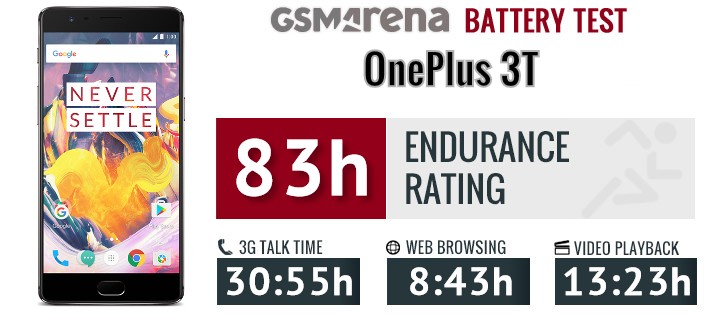
With minimal differences in most areas, it's no wonder that their overall endurance ratings are comparable. Still, the 3T's better longevity in the video playback department gives it a 5-hour edge altogether.
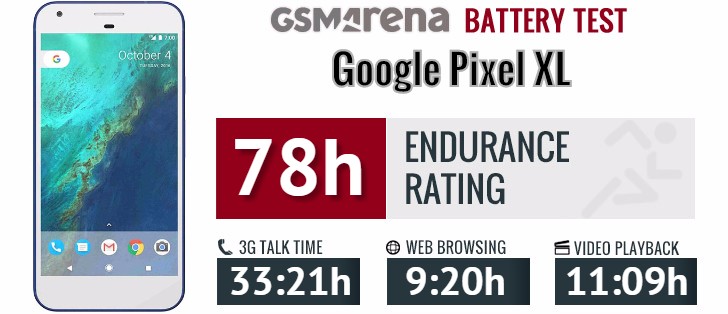
Half the price, just as good: Yes, indeed. Actually, if you watch a lot of videos, you'll find the OnePlus 3T to last you longer.
Software
You'd expect nothing else from a Google phone than vanilla Android, but the Pixel XL actually comes with a customized Google Now launcher. The Pixels are the only phones at this point to support the Google Assistant. There's a long-press action to evoke contextual menus 3D Touch-style, and the app drawer is just that - a drawer you pull up from the app dock.


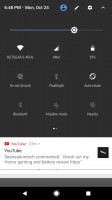
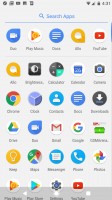

Pixel XL interface: Homescreen • Long-press shortcuts • Quick toggles • App drawer • Assistant
There's also the matter of having software support straight from Google itself with major Android releases promised for two years and another one on top of that for security patches. Additionally, with the Pixels you're getting unlimited lifetime original quality photo and video cloud storage (4K too) - it's hard to do the math.
On the OnePlus 3T you're treated to a stock-looking but in fact pretty extensively tweaked Android Marshmallow. The custom ROM goes by Oxygen OS, now in its 3.5.3 version, and offers gestures, a Shelf feature to keep the most used apps, contacts and widgets a swipe away, and a deep clear option for keeping pesky background services from eating at your resources.


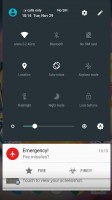
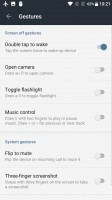

OnePlus 3T interface: Homescreen • Shelf • Quick toggles • Gestures • Deep clear
Half the price, just as good: No. We tend to take a pretty firm stance on the subject of flagships running the latest Android version. The OnePlus 3T doesn't, unlike the Pixel XL. The Phone by Google also carries a promise for timely updates and comes with unlimited photo and video storage. That said, the myriad of added features and the community behind the Oxygen OS do offset some of those Pixel advantages, to some users at least.
Performance
Both the Pixel XL and the OnePlus 3T are powered by the Snapdragon 821 chipset, only the 3T has the version with the higher-clocked CPU - 2.35GHz vs. the Pixel XL's 2.15GHz. It also enters this comparison with the upper hand that a lower-res display gives - fewer pixels to render.
Unsurprisingly, the higher clock rate gives the OnePlus 3T a significant advantage in CPU benchmarks - in single-gore GeekBench in particular the difference is substantial. The gap between the two is smaller in multi-core, but it is still there.
GeekBench 4 (single-core)
Higher is better
GeekBench 4 (multi-core)
Higher is better
Same GPU, different display resolution - that's a recipe for similar framerates in offscreen tests in GFXBench and vastly different results in the onscreen tests. Indeed, that's the case - the OnePlus 3T even manages to edge ahead of the Pixel XL by the odd frame in the offscreen tests. In the onscreen tests rendered at the devices' respective resolutions there's really no contest - the 3T's framerates are virtually double the Pixel's.
GFX 3.1 Manhattan (1080p offscreen)
Higher is better
GFX 3.1 Manhattan (onscreen)
Higher is better
GFX 3.1 Car scene (offscreen)
Higher is better
GFX 3.1 Car scene (onscreen)
Higher is better
In compound benchmarks the Pixel XL can't match the OnePlus' scores either. Interestingly enough, both in Basemark OS II 2.0 and Antutu 6 the 3T's numbers are 17% higher. That's to be expected really - CPU and GPU performance do have a significant contribution in these tests and the OnePlus flagship aces those.
Basemark OS 2.0
Higher is better
AnTuTu 6
Higher is better
Half the price, just as good: Actually better - the 3T consistently outperforms the Pixel XL in all benchmarks. The lower resolution gives it a marked advantage in graphics benchmarks too.
Loudspeaker & audio quality
OnePlus 1 and 2 used to score Excellent marks in our loudspeaker test, but not the 3 and 3T. The latest OnePlus only managed a Good rating. The Google Pixel XL, on the other hand, aced this test and earned our highest rating - Excellent like the OnePluses of old.
| Speakerphone test | Voice, dB | Ringing | Overall score | |
| 61.0 | 69.3 | 78.3 | Good | |
| 73.4 | 72.1 | 84.1 | Excellent |
As for audio output quality through the 3.5mm jack, both phones are excellent performers when plugged to an external amp - clean and loud. Then again neither one impresses when it needs to drive a pair of headphones - volume levels drops, distortion creeps in and stereo crosstalk gets a hike.
| Test | Frequency response | Noise level | Dynamic range | THD | IMD + Noise | Stereo crosstalk |
| +0.03, -0.01 | -94.3 | 94.3 | 0.0034 | 0.0063 | -93.4 | |
| +0.53, -0.30 | -92.9 | 93.0 | 0.017 | 0.434 | -49.7 | |
| +0.01, -0.03 | -94.0 | 94.0 | 0.0033 | 0.0066 | -92.9 | |
| +0.17, -0.04 | -92.0 | 92.7 | 0.0067 | 0.125 | -62.0 |
Half the price, just as good: Not really. The OnePlus 3T's loudspeaker is quieter, and while the Pixel XL is no benchmark for headphone audio quality, it's still a tiny bit better than the 3T.


Comments
Post a Comment